Comparing GoPro and DJI pole systems against dedicated platforms like Athlee and SwimPro on cost, image quality and what’s actually included
If you’re researching an underwater camera setup for swim teams, you’ve probably landed on two very different types of product. One is a build-your-own approach: an action camera like a GoPro or DJI, paired with a pole system that gets the live feed to your phone or tablet. The other is a dedicated, purpose-built system like Athlee or SwimPro, sold as a complete package with its own camera, app and pricing model.
Both approaches solve the same core problem: swimmers can’t see what’s happening below the surface, and coaches often can’t either from the pool deck. But the setups differ a lot in cost, image quality and what’s included. Here’s an honest comparison to help you work out which fits your program.

GoPro/DJI + Pole: What You Actually Get
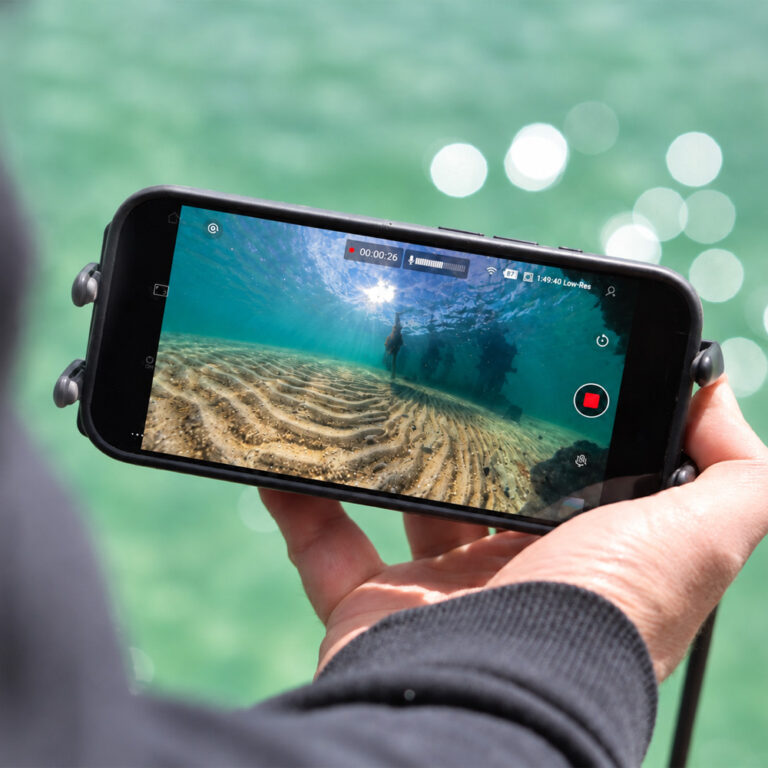
A pole-mounted underwater camera setup for swim teams, like the Seavu Seeker Pole Kit, uses an action camera you already own, or buy separately, connected through a sealed cable inside the pole to a transmitter that streams live to your phone or tablet.
For swim coaching specifically, the Seeker Pole Kit is available in two pole lengths:
- 1.5m pole: US$549
- 3m pole: US$699
This is a one-off cost. No subscription, no recurring software fee. You’ll need your own compatible GoPro or DJI camera in a waterproof case if you don’t already have one, which adds to the upfront cost but also means you’re not locked into a single proprietary camera. For more on choosing the right camera, see our underwater camera compatibility guide. If your camera breaks or you want to upgrade, you’re replacing the camera, not the whole system.
The trade-off is setup: you’re assembling a system from a few components rather than unboxing one integrated product.
Dedicated Underwater Camera Systems for Swim Teams: Athlee and SwimPro
Athlee (Denmark) is built for daily coaching at colleges and elite programs. It’s a complete hardware and software package: proprietary waterproof camera, mount, charger and an iPad app with live streaming, slow motion, annotation and multi-camera support.
Pricing starts at approximately US$3,800 for a single camera package, which includes 12 months of software access. After the first year, the software subscription renews at approximately US$828/year. Multi-camera packages scale up from there. Athlee’s live view also includes a built-in delay of 5 to 60 seconds, adjustable by the coach, rather than instantaneous.
SwimPro (Australia) takes a different pricing approach: no subscriptions or ongoing fees, all costs upfront. Pricing is higher than it first appears though:
| Package | Cameras | Price (USD) |
|---|---|---|
| DualCam | 2 | $4,590 |
| 3Cam | 3 | $7,020 |
| 4Cam | 4 | $9,585 |
| 6Cam | 6 | $13,635 |
| Endless (Endless Pools) | 2 + StartCam | $6,075 |
Worth noting directly from SwimPro’s own FAQ: “Wireless transmission and video reliability cannot be guaranteed… every SwimPro camera includes a 10m cable… as a reliable backup for consistent connectivity when needed.” Even a system SwimPro markets as wireless ships with a cable as standard, the same underlying principle Seavu builds the Seeker Pole Kit around from the start, rather than adding as an afterthought.
Image Quality: What You’re Actually Comparing
Seavu Seeker Pole Kit doesn’t have its own camera, so image quality depends entirely on the GoPro or DJI camera you pair it with. With a HERO13 Black, for example, you get recording quality up to 5.3K at 60fps. Image quality scales with whatever camera you own or choose to buy, and upgrading later means swapping the camera, not the whole system. See our GoPro underwater camera guide for more on settings and performance.
One honest caveat: what streams to your phone or tablet is a compressed, lower-resolution feed for real-time viewing. It’s not the full recorded resolution. This is standard for GoPro Quik and DJI Mimo live preview generally. The camera saves full-quality footage to its SD card regardless of what the live stream looks like.
Athlee uses a fixed proprietary camera shooting Full HD 1080p at 60fps. Simpler and consistent, since there’s no variability between units, but it’s a hard ceiling with no path to higher resolution without Athlee changing the hardware.
SwimPro uses a fixed camera at 2K (2560×1440) at 60fps, roughly double the detail of 1080p. It uses a narrower underwater field of view (~90°), using what they call Linear View Technology, to reduce the fisheye distortion that wide-angle lenses can introduce, since distortion at the edges of frame can make stroke analysis harder to judge accurately.
Distortion Correction Isn’t Exclusive to Dedicated Systems
That said, GoPro and DJI cameras also offer this option natively. GoPro’s Linear and Narrow FOV modes (available on HERO7 Black and newer, including HERO13) digitally correct fisheye distortion in-camera. This trades some field of view for a straighter, more natural perspective, the same underlying trade-off SwimPro’s fixed lens makes by design. This isn’t a capability unique to dedicated systems; it’s a setting choice available on current GoPro and DJI cameras too.
Practical takeaway: distortion correction isn’t a genuine point of difference between these systems. Both a GoPro/DJI paired with the Seeker Pole Kit and SwimPro’s fixed camera can produce a distortion-corrected image for accurate technique analysis. The GoPro/DJI setup also gives you the flexibility to switch back to a wider view when that suits the shot, and it outresolves both dedicated systems on raw recording quality.
Camera Technology: Fixed vs Upgradeable
This is where the BYO-camera approach has a structural advantage worth calling out directly. GoPro and DJI release new camera generations roughly every year, each with meaningful jumps in sensor quality, low-light performance, stabilisation and connectivity.
With the Seeker Pole Kit, upgrading to the latest camera tech is simply a matter of buying a new GoPro or DJI camera, generally a few hundred dollars, without replacing the pole, mount, cable or transmitter.
With Athlee and SwimPro, the camera is part of a proprietary hardware package. Both companies do sell individual replacement cameras rather than requiring a full new package, but you’re upgrading on their hardware release schedule, not the broader action camera market’s, and at whatever price they set for that specific camera model. If their camera technology doesn’t keep pace with GoPro or DJI’s annual improvements, that becomes a fixed limitation of the system rather than something you can address by swapping a component.
Practical takeaway: if staying on current camera technology matters to your program long-term, a GoPro/DJI-based setup gives you a faster, cheaper upgrade path than a system tied to one company’s proprietary camera line.
Displaying to a Bigger Screen
For squad sessions or group coaching, viewing on a phone or small tablet screen isn’t always practical. The GoPro Quik app includes an option to display a clean live preview with no on-screen overlays, menus or UI elements, just the camera feed itself, which makes it suitable for mirroring to a larger display.
Paired with Seavu’s optional Wireless HDMI Display Adapter, this means you can show the Seeker Pole Kit’s live feed on a poolside TV or monitor for the whole squad to see at once, rather than everyone crowding around one phone.
Neither Athlee nor SwimPro build their iPad-based apps around this kind of clean external display output. As a result, both design their interfaces for coach-side control on the tablet itself.
Practical takeaway: if group viewing on a bigger screen without app clutter matters to your coaching setup, this is a point in favour of the GoPro Quik + Seeker Pole Kit combination.
Portability for Travelling Coaches
If you coach across multiple clubs or travel for training camps and meets, how easily the whole setup packs down matters as much as any spec on paper.
Seavu built the Seeker Pole Kit with this in mind: the carbon fibre pole telescopes down to a compact size, and the 1.5m option in particular travels easily in a bag alongside your action camera, with no separate power source, streaming box or bulky accessories needed.
However, Athlee’s single-camera package is also genuinely portable: a single camera, mount, charger and drybag, and Athlee markets it around fast, drop-and-go setup. SwimPro’s entry DualCam package is similarly compact for one or two cameras.
Where portability becomes more of a factor is with the larger multi-camera packages from either dedicated system. SwimPro’s 4Cam and 6Cam setups, for example, involve multiple cameras, wall/floor/pole mounts and a streamCORE unit with USB-C power banks to run everything. That’s more gear to pack, charge and set up each time, which suits a fixed pool base better than a coach moving between venues weekly.
Practical takeaway: for a single travelling coach, all three systems have a genuinely portable entry option. The gap widens if you’re comparing a single GoPro/DJI + pole setup against a multi-camera dedicated package. More cameras means more gear to transport and set up at each new location.
How Each Underwater Camera Setup for Swim Teams Compares
| Seavu Seeker Pole Kit | Athlee | SwimPro | |
|---|---|---|---|
| Starting price | US$549 | ~US$3,800 (1 camera) | US$4,590 (2 cameras) |
| Ongoing subscription | None | ~US$828/year after year 1 | None |
| Camera included | No (BYO GoPro/DJI) | Yes (proprietary, 1080p60) | Yes (proprietary, 2K60) |
| Camera upgrade path | Buy new GoPro/DJI, keep rest of system | Proprietary hardware, vendor schedule | Proprietary hardware, vendor schedule |
| Distortion correction | Yes (Linear/Narrow FOV modes) | Not confirmed | Yes (Linear View Technology) |
| Live feed | Live, compressed preview | 5–60 sec adjustable delay | Live |
| Multi-camera support | No | Yes, up to 4 | Yes, up to 6 |
| Big screen display | Yes, via Wireless HDMI Display Adapter | Via Apple TV app casting | Via Apple TV app casting |
| Travel-friendly (single camera) | Yes | Yes | Yes |
| Used by | Individual coaches, clubs and national teams | College and elite programs | Clubs through to national federations |
Which Setup Actually Suits You
A GoPro/DJI + pole underwater camera setup for swim teams is a genuinely capable option at a fraction of the cost of a dedicated system, with no ongoing fees and a clear, affordable upgrade path as camera technology improves. It’s also a strong fit for coaches who travel between clubs or venues, with a compact, self-contained setup that doesn’t rely on separate power sources or streaming hardware.
If you specifically want multi-camera setups with a fully built-out software ecosystem (annotation tools, saved multi-angle layouts, per-swimmer video libraries), Athlee and SwimPro’s dedicated platforms offer that out of the box. Their larger multi-camera packages do involve considerably more gear to transport, though, if you’re moving between venues regularly.

For a broader look at how live underwater viewing supports coaching more generally, see our underwater swim coaching camera systems page, or read about real-time feedback for swim coaching in more depth.
Where Seavu Fits
The Seeker Pole Kit isn’t trying to be an enterprise coaching platform. It’s built for coaches who want a reliable, affordable way to see stroke mechanics live from poolside, using a camera they can choose and upgrade themselves, without signing up for a subscription.