Update: GoPro Mission 1 Underwater Live View with Seavu
Since publishing this article, the GoPro Mission 1 and Mission 1 Pro have become available, and we have been able to test them with Seavu systems ourselves.
This article was originally written while details around GoPro Quik live preview, app control and real world performance were still emerging. Now that we have tested the cameras in practice, we have created a follow up guide focused specifically on underwater use.
The new guide explains how GoPro Mission 1 and Mission 1 Pro work with Seavu kits for live underwater viewing, why normal Wi Fi and Bluetooth connections do not work well below the surface, and which Seavu setup suits different deployment styles.
Read the follow up guide: How to Use GoPro Mission 1 for Live Underwater Viewing
Does GoPro Mission 1 support live preview and controls via Quik, and what does that mean for underwater users?
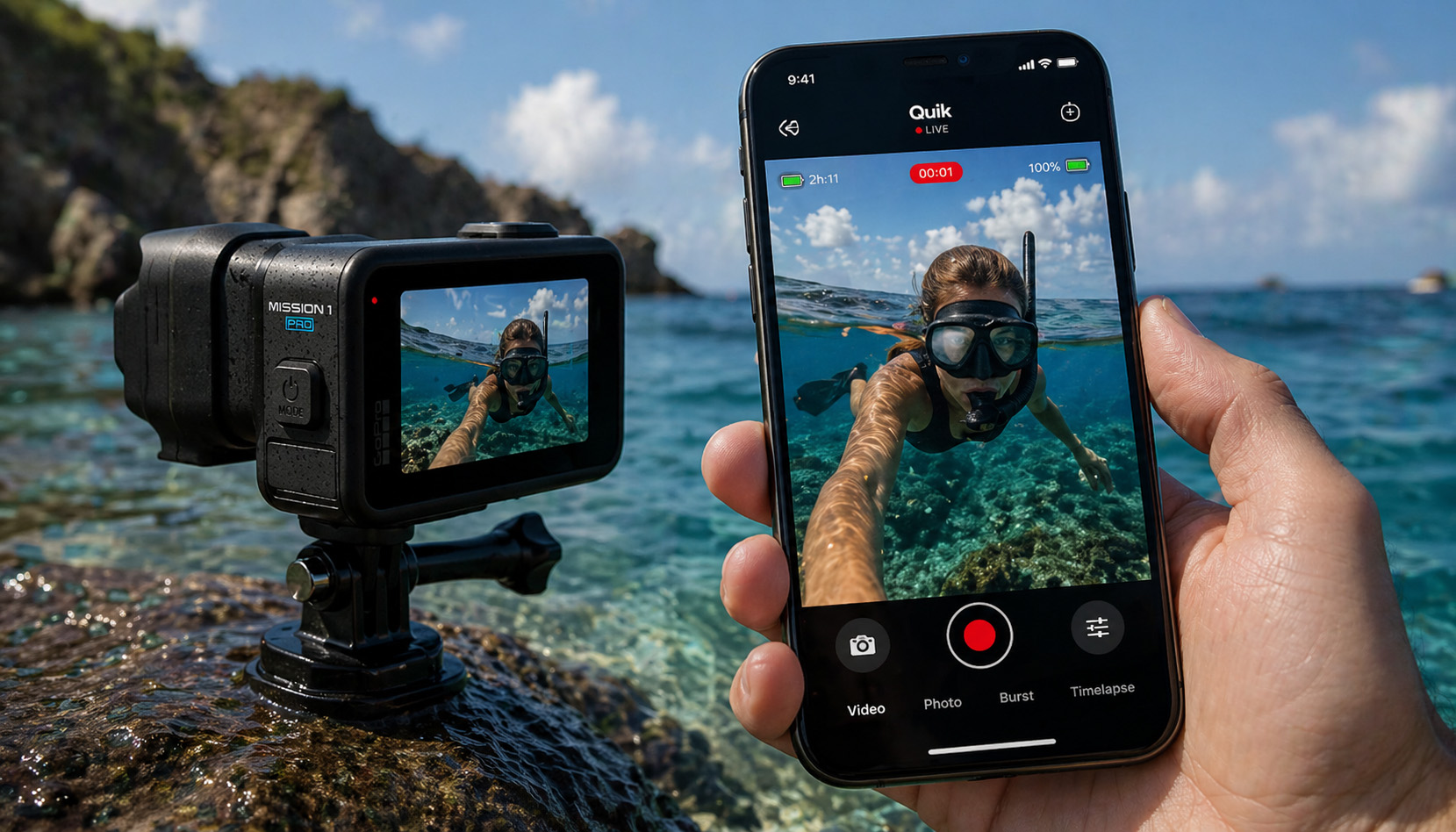
One of the biggest questions around the GoPro Mission 1 is not about resolution or frame rates.
It is much simpler than that.
Can you see and control your camera in real time using the GoPro Quik app?
For years, GoPro users have relied on Quik for live preview, remote control, and quick setup. It is a core part of how action cameras are used in the real world.
However, with Mission 1, the story is less clear.
GoPro has focused heavily on image quality, low light performance, and positioning the camera as a compact cinema tool. The official Mission 1 announcement highlights a 50MP 1 inch sensor, GP3 processor, 8K video, improved dynamic range, and mission critical reliability. GoPro’s official announcement makes it clear that this is a serious camera for filmmakers and creators.
Yet when it comes to live preview and control through Quik, the picture is still evolving.
Does GoPro Mission 1 Support Live Preview in Quik?
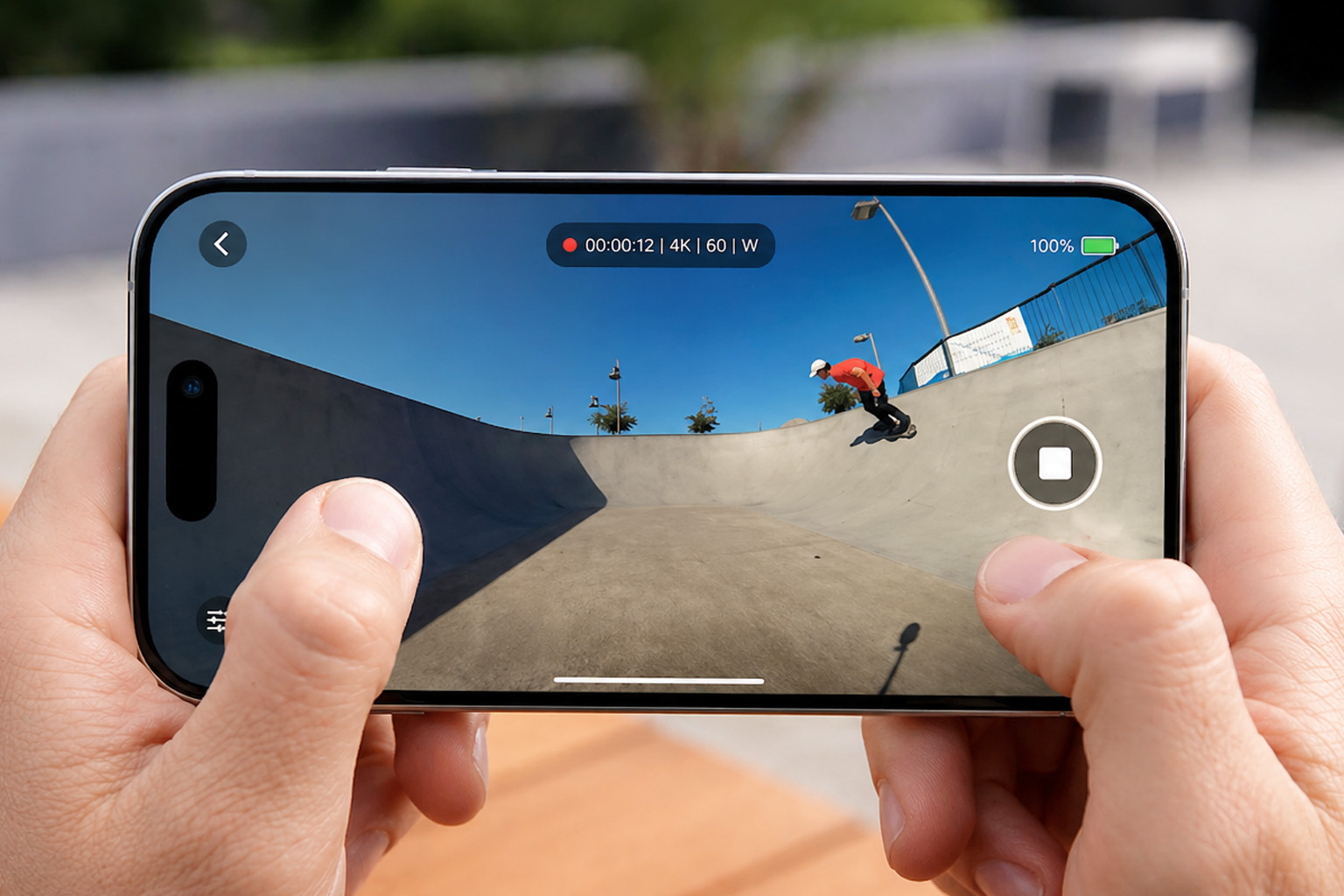
GoPro has not positioned live preview as a headline feature of Mission 1 within the Quik app. However, support has confirmed that live preview will work, which adds important context to how the system is expected to function.
This is important because live preview has always been one of the most useful parts of the GoPro experience. On many GoPro cameras, you can open Quik, connect to the camera, view your shot, and adjust framing before recording. GoPro’s own support material explains how Quik live preview works on supported cameras.
With Mission 1, GoPro has confirmed plenty of high end capture features. However, live preview is not clearly highlighted within official materials as a core part of the workflow, including:
- Live preview via Quik
- Real time framing on a phone
- Live monitoring while recording
- Full camera control through the app
This has left many users wondering how live preview fits into the Mission 1 workflow, and how it will actually be used in real world conditions.
What GoPro Does Confirm About Quik
GoPro does confirm that Mission 1 is part of the broader Quik ecosystem.
From official material, Quik is positioned around features such as cloud upload, editing, automatic highlights, and wireless file transfer. These are all useful tools, especially for content creation and post capture workflows.

While GoPro’s official materials focus heavily on editing, cloud and media features, live preview is not positioned as a core headline feature within the Quik ecosystem.
When we reached out to GoPro support, they confirmed that live preview will work with Mission 1 through the Quik app. This brings it in line with expectations for a modern connected camera system, allowing users to view and control the camera in real time under supported conditions.
If this is the case, Mission 1 has strong potential to be used for real time underwater viewing when paired with a system like Seavu, which enables a stable connection in environments where wireless signals cannot operate effectively.
At the same time, Quik still appears to be primarily positioned around post capture workflows rather than as a dedicated real time monitoring platform.
For some users, that may not matter. However, for anyone who relies on live preview for framing, filming, inspection, fishing, or research, it becomes a key consideration.
Why Live Preview Matters
How useful live preview is in practice depends on how and where it can be used.
If the camera is in your hand or connected to a nearby monitor, live preview is simple and effective. However, many real world use cases are not like that.
Whether you are positioning a camera underwater, monitoring behaviour, checking framing, or adjusting your setup, being able to see what the camera sees in real time makes a significant difference.
Without reliable live preview, you are effectively working blind.
This becomes even more important underwater, where you cannot see the camera at all and conditions change quickly.
In the video below, videographer Henry Brockman shows how important live preview is when using an action camera underwater.
This is exactly where live preview changes the outcome, especially when the camera is out of sight underwater.
External Monitoring Is Not the Same as Quik Live Preview
Mission 1 appears to be built for more advanced production workflows, including accessories like GoPro’s new Media Mod. GoPro’s product information describes Mission 1 as a camera line designed to go beyond traditional HERO cameras, with higher performance, better thermal handling, and more professional capture options. GoPro’s Mission 1 Pro product page reinforces that shift.
For filmmakers, external monitoring can make sense. The camera is close by, the monitor is nearby, and the setup is controlled.
However, that is very different from how most GoPro users operate in practical situations.
Many people rely on a phone or tablet for quick framing and control. This is especially true in field use, on boats, during inspections, and when the camera is mounted somewhere difficult to reach.
So while external monitoring may suit production crews, it does not replace the simple value of Quik live preview and app control.
Why Live Preview Is So Valuable Underwater
Live preview becomes far more important in environments like underwater use, where being able to see what your camera sees in real time makes all the difference.
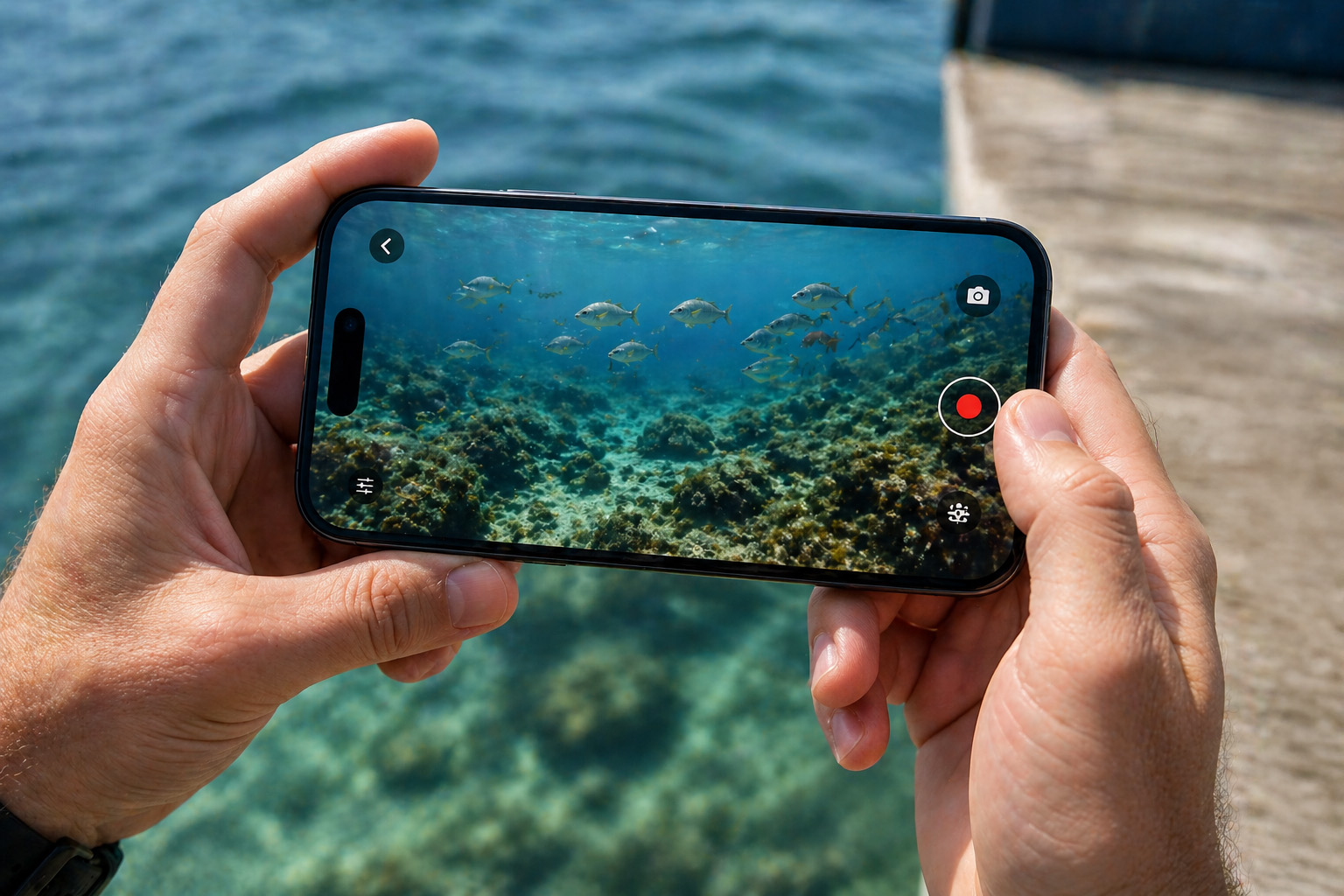
At Seavu, we see this every day through customers using cameras for fishing, inspections, marine research, coaching, tourism, and filming.
When you can see what your camera sees underwater, everything changes.
- You can position the camera accurately
- You can adjust angle and depth in real time
- You can watch fish behaviour as it happens
- You can inspect structures with more confidence
- You can avoid wasted drops and empty footage
Without live preview, you are guessing. You lower the camera, record, and only find out later whether the angle was right.
For casual filming, that might be fine. However, for fishing, research, inspections, and serious underwater filming, it quickly becomes limiting.
How Seavu Enables Live Preview and Camera Control Underwater
While cameras like Mission 1 now support live preview, maintaining that connection in environments like underwater use requires a different approach.

Seavu systems are designed to make live preview and camera control possible in underwater environments.
Instead of relying on wireless connections alone, Seavu uses a dedicated transmitter and receiver system to maintain the camera’s connection to your mobile device.
Here is how it works in practice:
- The transmitter connects to your camera and captures its Wi Fi and Bluetooth signals
- These signals are sent through a custom cable to the receiver above water
- The receiver then communicates with your phone or tablet as if the camera were still nearby
Because of this setup, you can continue to use your camera’s app, such as GoPro Quik, just as you would above water.
That means you can view a stable live preview, start and stop recording, change modes, adjust settings, and reposition your camera with immediate feedback.
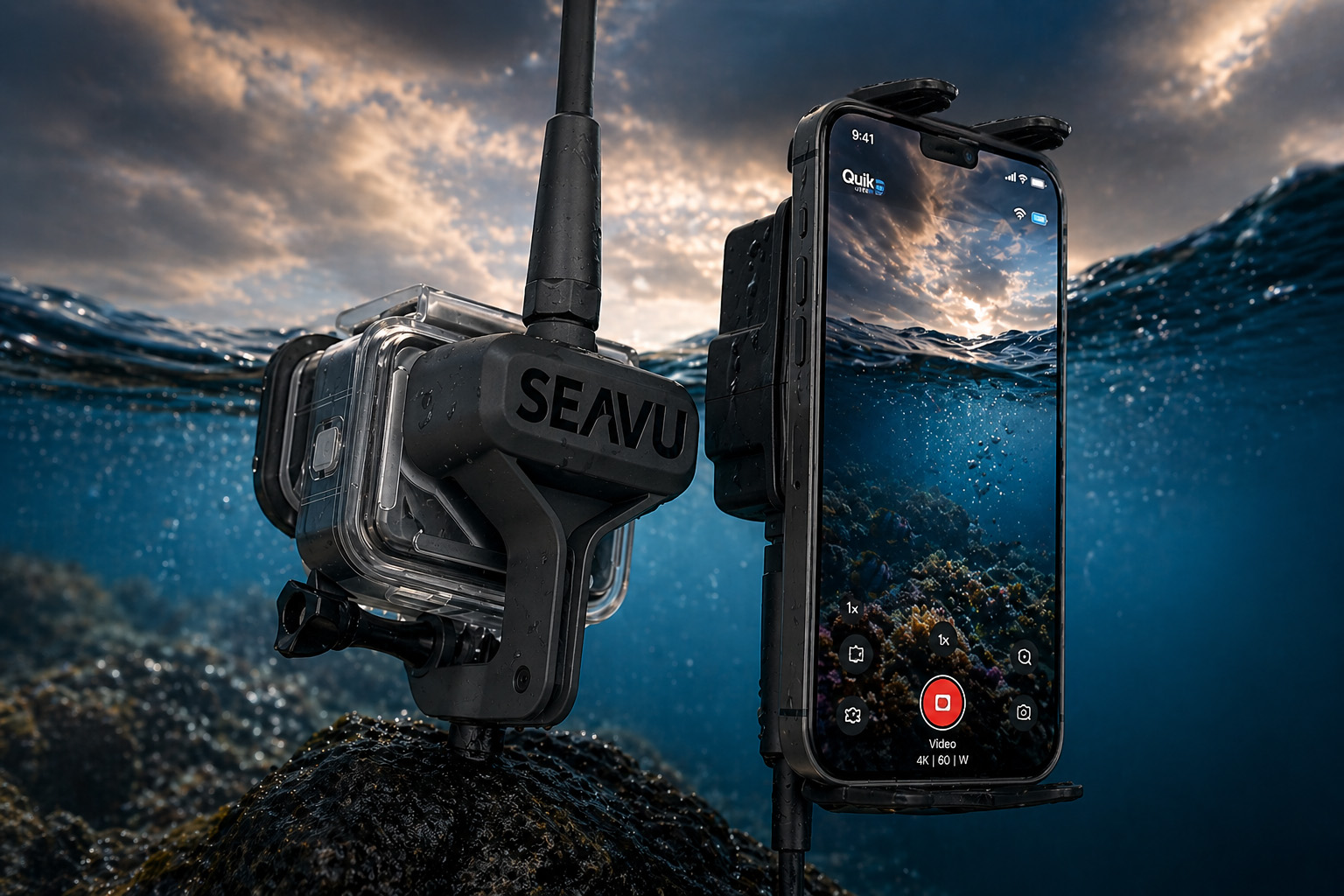
For phone and tablet based underwater viewing, the Seavu Seeker Marine Kit is the most relevant setup. It is especially useful for fishing, research, inspections, and live underwater observation.
Instead of changing how you use your camera, Seavu extends the way it already works into the underwater environment.
Watch the video below to see how Seavu works as an underwater live camera system for GoPro action cameras.
Do you need a waterproof case for the GoPro Mission 1?
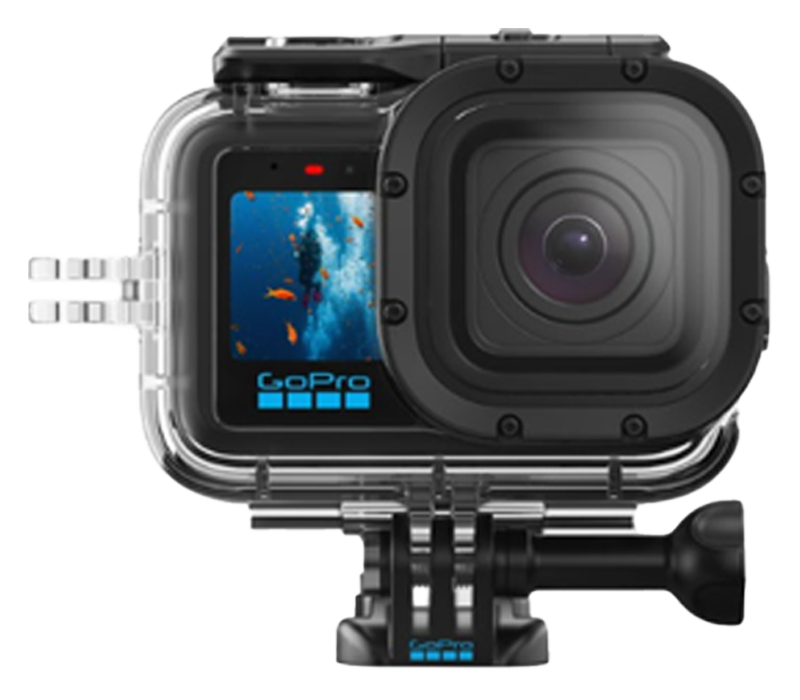
The GoPro Mission 1 and Mission 1 Pro are waterproof to 20m straight out of the box, which is enough for shallow water use.
However, if you are planning to film deeper, dive, or use the camera regularly underwater, a dedicated waterproof case becomes important.
A protective housing increases the depth rating to around 60m and adds extra protection against impact, debris, and harsh conditions.
This is especially relevant if you are pairing the camera with a live viewing setup, where reliability and protection matter just as much as image quality.
Read our full guide to the GoPro Mission 1 waterproof case.
Is GoPro Mission 1 Overkill for Most Users?
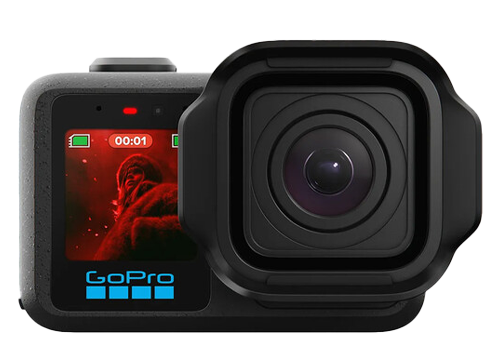
For many users, the GoPro Mission 1 may be more camera than they actually need.
It is a powerful system, designed for high end image quality, low light performance, and a more cinematic workflow. For filmmakers, that is exciting.
However, many real world users, especially underwater, are not limited by resolution. They are limited by visibility.
For fishing, research, inspections, and general underwater observation, the goal is often simple. You want to see what is happening, understand the environment, and capture useful footage.
If you cannot see what the camera is pointed at, even the best sensor will not solve the problem.
This does not make Mission 1 the wrong camera. It simply means that for many practical applications, especially underwater, its full potential depends on having a reliable way to view and control it in real time.
DJI Osmo Action 6 vs GoPro: What We’re Seeing in Real Use
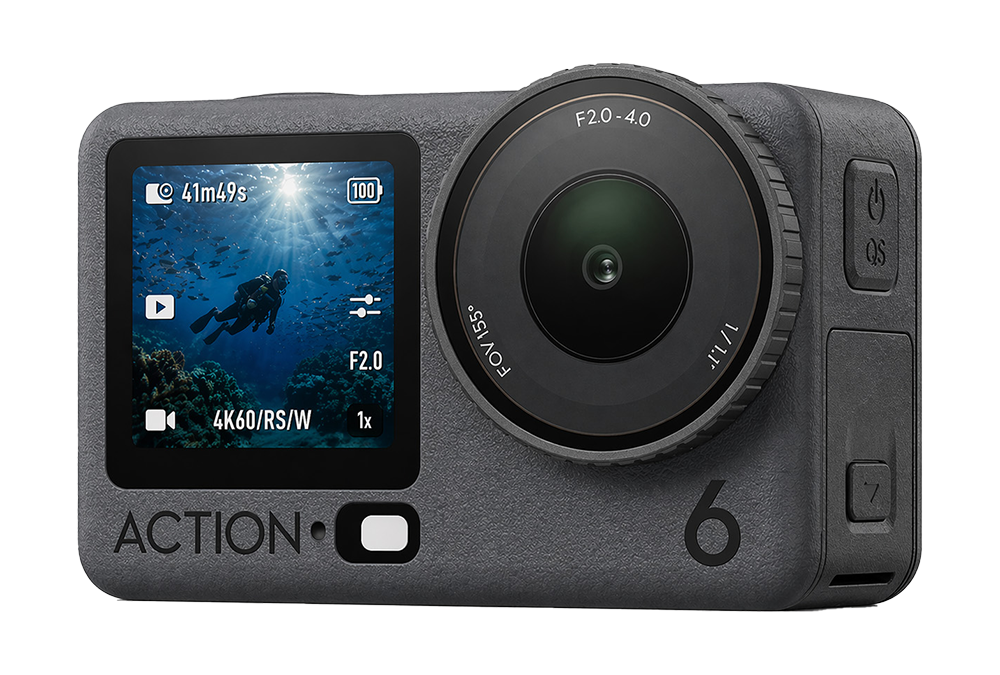
While GoPro is moving Mission 1 toward the compact cinema category, DJI is continuing to push hard in the action camera space.
The DJI Osmo Action 6 introduced a larger 1/1.1 inch square sensor and variable aperture, which shows DJI is paying close attention to image quality, low light performance, and real world usability.
From customer feedback and real world use, we are seeing more users move toward DJI cameras for underwater applications. The main reasons are clear:
- Better low light performance underwater
- Longer and more consistent battery life
- A simple, reliable user experience
These are not just spec sheet differences. They matter when a camera is sealed in a housing, deployed underwater, and expected to perform without constant adjustment.
For many fishing, inspection, and research setups, reliability is more important than maximum resolution.
What This Means for Loyal GoPro Users
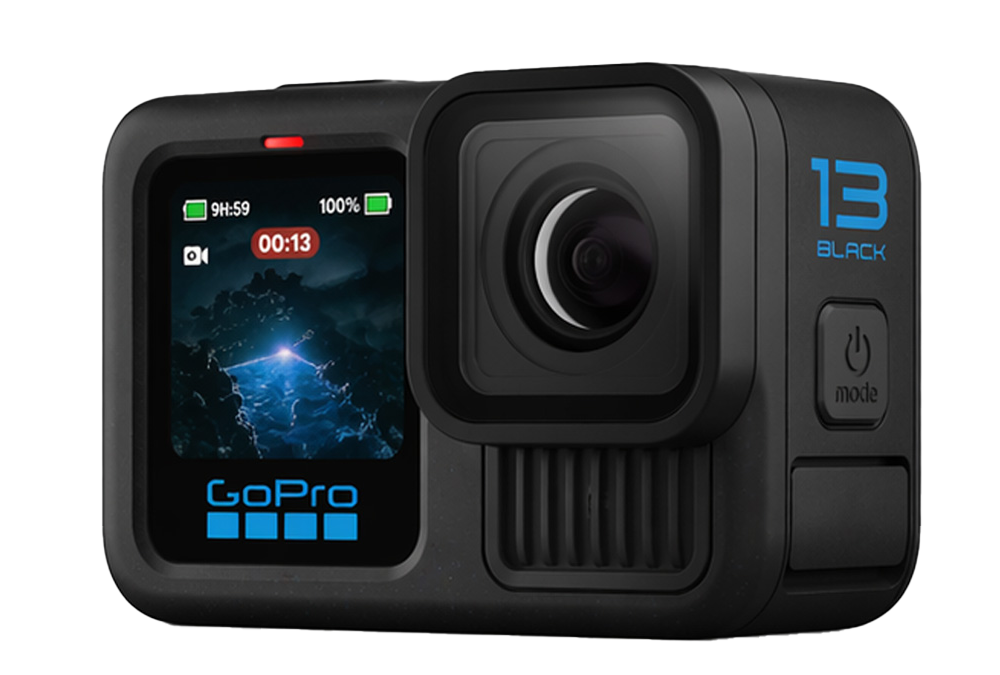
For long time GoPro users, the situation is interesting.
The HERO13 Black remains a strong and proven action camera. It is compact, familiar, widely supported, and works well with existing mounts and underwater systems.
However, if you want a traditional GoPro action camera today, the HERO13 is still the main option. Mission 1 is a different category. It is more cinematic, more advanced, and likely more expensive than many everyday users need.
So loyal GoPro users are left with a choice.
They can stay with HERO13 and keep the familiar GoPro workflow. Or they can look at Mission 1 for higher image quality, while accepting that it may not offer the same simple action camera experience. Meanwhile, DJI is becoming harder to ignore for users who prioritise battery life, low light performance, and ease of use.
Where Is the GoPro HERO14, and Has It Been Delayed by Mission 1?
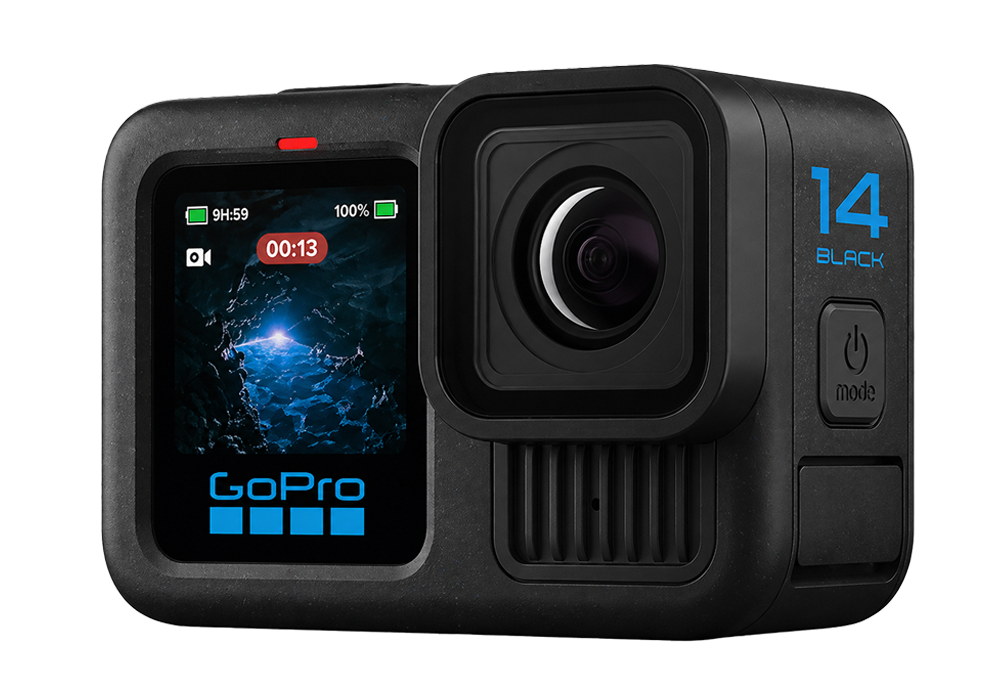
GoPro has not released a HERO14 yet, and it has been a long wait.
For years, GoPro followed a predictable annual release cycle, typically launching a new HERO model each September. That pattern has now been broken. As of 2026, there has been no official HERO14 announcement, which is unusual for the brand. See full HERO14 rumours and release updates.
At the same time, GoPro has shifted attention toward new product categories, including the launch of Mission 1. This raises a fair question. Has the focus on developing new camera platforms contributed to delays in the next HERO release?
To be clear, GoPro has not killed off the HERO series. It remains the core of their lineup. However, the slower update cycle suggests that development priorities may have shifted, at least in the short term.
There are also technical factors to consider. A delayed release may indicate a larger hardware upgrade cycle rather than incremental changes, with improvements expected in areas like battery life, thermal performance, connectivity, and low light performance.
If these upgrades are realised, the HERO14 could become a serious competitor to the DJI Action 6, especially if GoPro delivers meaningful improvements in low light performance and real world usability.
For many underwater users, the real question is simpler. Do you need a more complex cinema style camera like Mission 1, or a reliable action camera with strong low light performance?
In most cases, the practical solution is still a traditional action camera with improved low light capability, strong battery performance, and a larger sensor closer to one inch, combined with a reliable live viewing setup.
For now, the HERO13 remains the current flagship, while users wait to see how GoPro balances innovation across both its new and existing camera lines.
Final Thoughts
The GoPro Mission 1 is a major step forward in image quality.
However, how live preview and Quik app control perform in real world use is still the key question.
GoPro has clearly explained the camera’s sensor, resolution, performance, and production focus. But it has not clearly positioned live preview as a core part of the Mission 1 workflow.
For filmmakers, that matters. For underwater users, it matters even more.
At Seavu, we have seen how powerful live preview can be for fishing, research, inspections, and underwater filming. Once you can see what your camera sees in real time, you stop guessing and start making better decisions.
Mission 1 may deliver better image quality. DJI may offer better practical performance for some users. HERO13 may still be the safe choice for loyal GoPro customers.
But no matter which camera you choose, the real value comes from being able to see and control it when it matters.
With live preview now confirmed, the real question is not whether it exists, but how reliably it works when it matters most.
…
Disclaimer: Seavu is not affiliated with, endorsed by, or in partnership with GoPro, DJI or any other brands mentioned. All product names, logos and trademarks are the property of their respective owners.
Some images and visualisations on this page are illustrative or generated for demonstration purposes and may not reflect actual products, features or final designs.