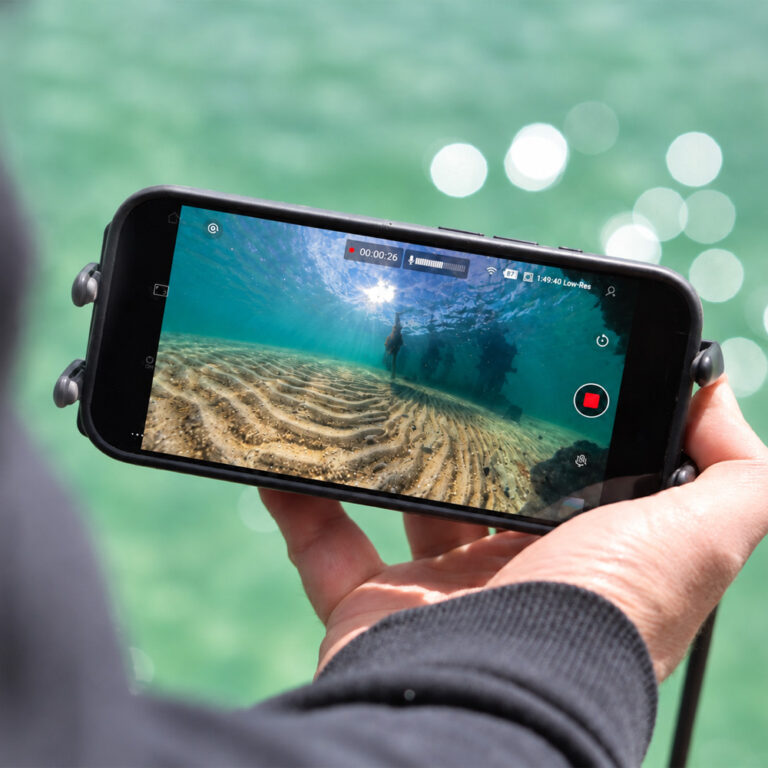
DJI fogged our first two 360 cameras. The Osmo 360 II and its waterproof case are now here. Here is what has changed.
The Osmo 360 was DJI’s first 360 camera, and on paper it was a strong one: dual sensors, f/1.9, 8K at 50fps and a square HDR design nobody else had. We wrote at the time that it might be the camera underwater 360 filmmakers had been waiting for.
Then we took it in the water.
What we found, and what DJI’s own documentation quietly confirms, is that the Osmo 360 was a strong camera that did not belong underwater. Not because it leaked. Because of fogging, refraction and a housing that took more than a year to arrive.
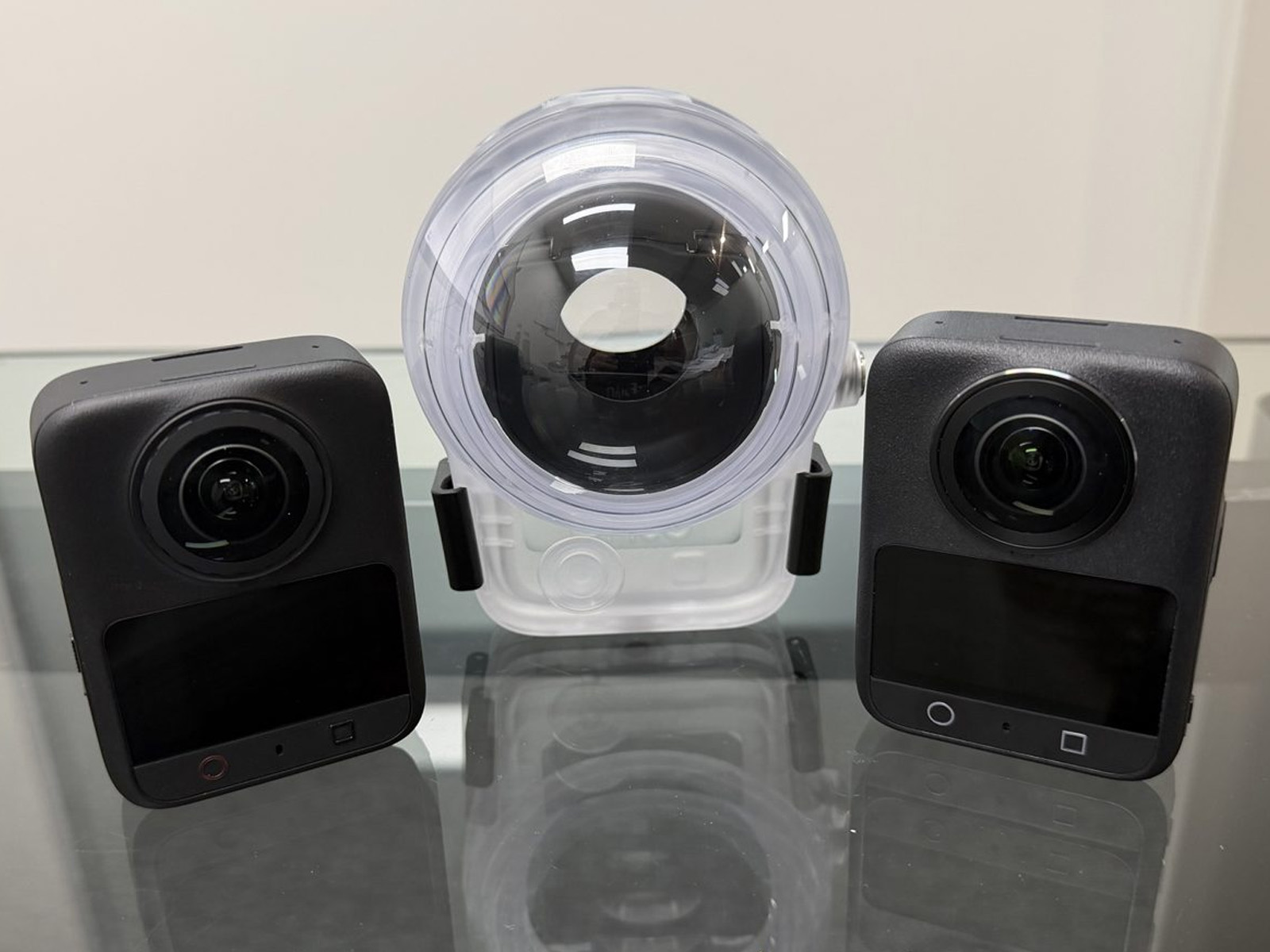
The Osmo 360 II launched in China on 13 August and internationally in September, and it is now available in Australia for A$899. The Invisible Waterproof Case has finally shipped alongside it. We now have the original Osmo 360, the Osmo 360 II and the new case in hand. So the question is simple: has DJI fixed it?
It fogged. Both of ours.
Within days of the original launch, users were posting about fogged lenses. In one case, the optics clouded over after fifteen minutes of 8K recording.
We saw it on both units we bought at release, and it was worst during temperature changes going into cooler water. The result was soft footage, stitching falling apart and longer sessions written off.

Note where the condensation sits. It is behind the outer element, not on it. This is not something you can wipe off.
DJI acknowledged the problem. Their explanation is that humid air trapped inside the body during a battery swap condenses on the optics once the camera heats up. Their fix is to run the camera with the battery compartment open for fifteen to twenty minutes before sealing it.
That is a workaround, not a fix, and it tells you the moisture is already inside the body before you get near the water. We covered this in detail in our piece on why the Osmo 360 fogs up in water.
DJI never really wanted it underwater
The Osmo 360 is IP68 rated and waterproof to 10m without a case. But DJI’s own support documentation says shooting underwater with the camera body alone is not recommended, because the convex fisheye design refracts light underwater and causes distortion and stitching errors.
DJI also warns against fitting the Transparent Lens Protectors during water sports, rain or snow, because they cause fogging. The accessory designed to protect the lens makes the fogging worse.
The waterproof case finally arrived
A proper housing solves most of this. It corrects refraction, seals out humidity and takes the camera deeper than 10m.
DJI announced the Invisible Waterproof Case with the original Osmo 360 in July 2025, gave it a SKU, then let it disappear for more than a year. It has now shipped alongside the Osmo 360 II, rated to 50m and compatible with both cameras. DJI says its custom optical lens compensates for underwater refraction to keep stitching natural.
It sold out quickly and has been hard to find since. We cover stock, specs and the full history in our DJI Osmo 360 waterproof case article.
Waterproof Case mode is the catch for original owners
The Osmo 360 II has a Waterproof Case mode in its settings. It switches camera control to the power button, since the touchscreen cannot be used inside the case:
- Press once to take a photo or start and stop recording
- Press twice to open the Quick Switch page
- Short press repeatedly to cycle through shooting modes
DJI support told us the Osmo 360 II may have stitching issues underwater if this mode is not turned on, and recommends always enabling it before entering the water.
The original Osmo 360 does not have this mode, even on the latest firmware (01.03.08.70 at the time of writing). DJI support told us it is planned in a future firmware update, but could not give a date. Until it appears in DJI’s release notes, the 360 II is the better choice if you plan to use the case.
What the 360 II changes
| Feature | Osmo 360 | Osmo 360 II |
|---|---|---|
| Max 360 video | 8K/50fps | 8K/60fps |
| Dynamic range | 13.5 stops | 14.5 stops |
| Battery | 1,950mAh | 2,150mAh |
| Lenses | Fixed | User replaceable |
| NFC pairing | No | Yes |
| Waterproof Case mode | Not yet available | Yes |
| Invisible Waterproof Case | Compatible | Compatible |
The replaceable lenses are the real news. On the original, a scratched lens meant a service ticket. A 360 camera has glass exposed on both faces, so this was the most requested fix, and DJI delivered it. A replacement lens kit costs A$49 in Australia.
Does any of it help underwater?
Some of it. More than we expected on one point, less on the rest.
Replaceable lenses might fix more than scratches
The obvious benefit is protection from damage, and underwater that matters, because sand, rock and coral wear down exposed glass. There may be a second benefit. If the humidity behind the optics was sealed in during assembly, as many believe, a removable lens gives you a way to reach it. On the 360 II you can remove the optics, dry them properly and reseal. That does not prove the fogging is solved, but it is the first change that could address the cause rather than the symptom.
The bigger battery cuts both ways
About ten percent more capacity means longer sessions, which matters when you cannot open a housing mid dive. It also means more sustained heat inside a sealed body, which is exactly the condition that caused the fogging.
The fisheye problem needs a housing, and now there is one
Every 360 camera uses convex fisheye lenses, because the overlapping coverage is what makes the stitch possible. Underwater, those lenses refract light in a way the stitching was not built for. The fix was never a different camera. It was a housing with corrective optics, and that now exists.
Fogging is still unproven
DJI has not announced any anti-fog changes to the 360 II itself. The case comes with anti-fog inserts, which should help, but we will not call fogging solved until we have tested it.
The verdict, for now
Calling the original a failure would be unfair. As a 360 camera it is excellent. As an underwater camera, it was oversold by everyone, including us, and DJI’s own documentation says as much if you read it closely.
The 360 II, paired with the Invisible Waterproof Case and Waterproof Case mode, is the first time DJI has offered a complete underwater 360 setup. On paper, that addresses most of what went wrong. What still needs proving is fogging in real conditions.
We now have both cameras and the case, and testing is underway. We will update this article with what we find.
Whichever camera you use, one limit does not change. WiFi and Bluetooth do not travel through water, so nothing streams a live view once it is under. A Seavu system carries the signal back to the surface so you can watch the feed on your phone while the camera is below.
Want to see what the Osmo 360 or Osmo 360 II sees underwater while it records? Read Live 360 Underwater Footage on Your Phone with the Seavu Orbit 360.