The physics behind underwater signal loss and what works instead

Wi-Fi and Bluetooth do not work underwater because radio signals are rapidly absorbed by water.
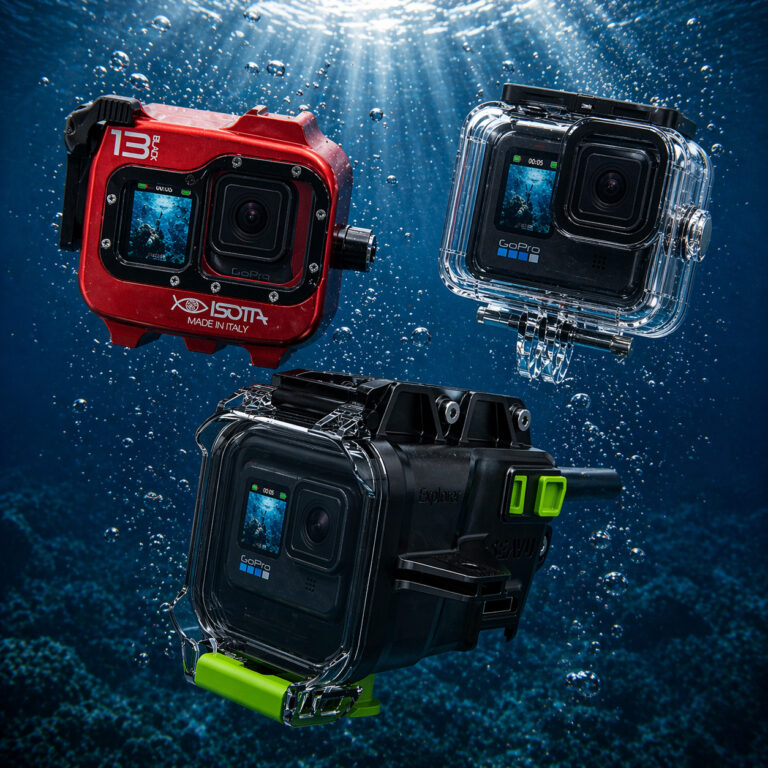
Even at very shallow depths, water blocks the frequencies used by action cameras, causing live video feeds and remote connections to drop almost immediately. This is why GoPro and DJI cameras often connect perfectly at the surface, then lose signal as soon as they are submerged.
Understanding this limitation is essential for anyone trying to view live underwater footage reliably.
Why Wireless Signals Fail Underwater
The science behind signal transmission
Wi-Fi and Bluetooth rely on high-frequency radio waves to transmit data. These signals travel efficiently through air but perform extremely poorly in water. Both freshwater and saltwater absorb radio frequencies, with saltwater being even more aggressive due to its conductivity, a limitation that is well documented in electromagnetic wave propagation research.
As a result, radio signals that can travel metres through air are reduced to just centimetres underwater. Increasing signal strength or using external antennas does not overcome this physical limitation.
Why connections fail as soon as a camera is submerged
Most action cameras use Wi-Fi and Bluetooth to provide live preview, camera control, and file transfer while above the surface. Once the camera enters the water, the radio signal is absorbed almost instantly, causing the connection to drop.
As soon as an action camera is submerged, the radio signal is absorbed by the surrounding water, causing the connection to drop almost immediately. This behaviour is consistent with how radio frequency signals interact with water at Wi-Fi and Bluetooth frequencies.
Common Misconceptions About Underwater Wi-Fi
- Waterproof does not mean wireless works underwater. Waterproofing protects the camera but does not enable signal transmission.
- Stronger antennas do not fix the problem. Signal absorption is a physical limitation, not a power issue.
- Wi-Fi extenders do not work underwater. Extenders still rely on radio transmission.
- Range claims apply above water only. Manufacturers quote ranges measured in air.
This is why so-called underwater Wi-Fi camera systems often cause confusion. The limitation is not the camera, but the physics of wireless signals underwater.
What Actually Works for Live Underwater Video

To view live underwater footage reliably, the signal must be carried out of the water using a physical medium rather than transmitted wirelessly through water.
Cable-based systems solve this problem by capturing the camera’s signal underwater, transmitting it to the surface, and only using wireless communication once the signal is back in air.
To understand this approach in more detail, see our guide on how to get live video underwater.
How Seavu Enables Live Underwater Viewing
Seavu systems are designed specifically to work around the physics that prevent wireless signals from travelling underwater.
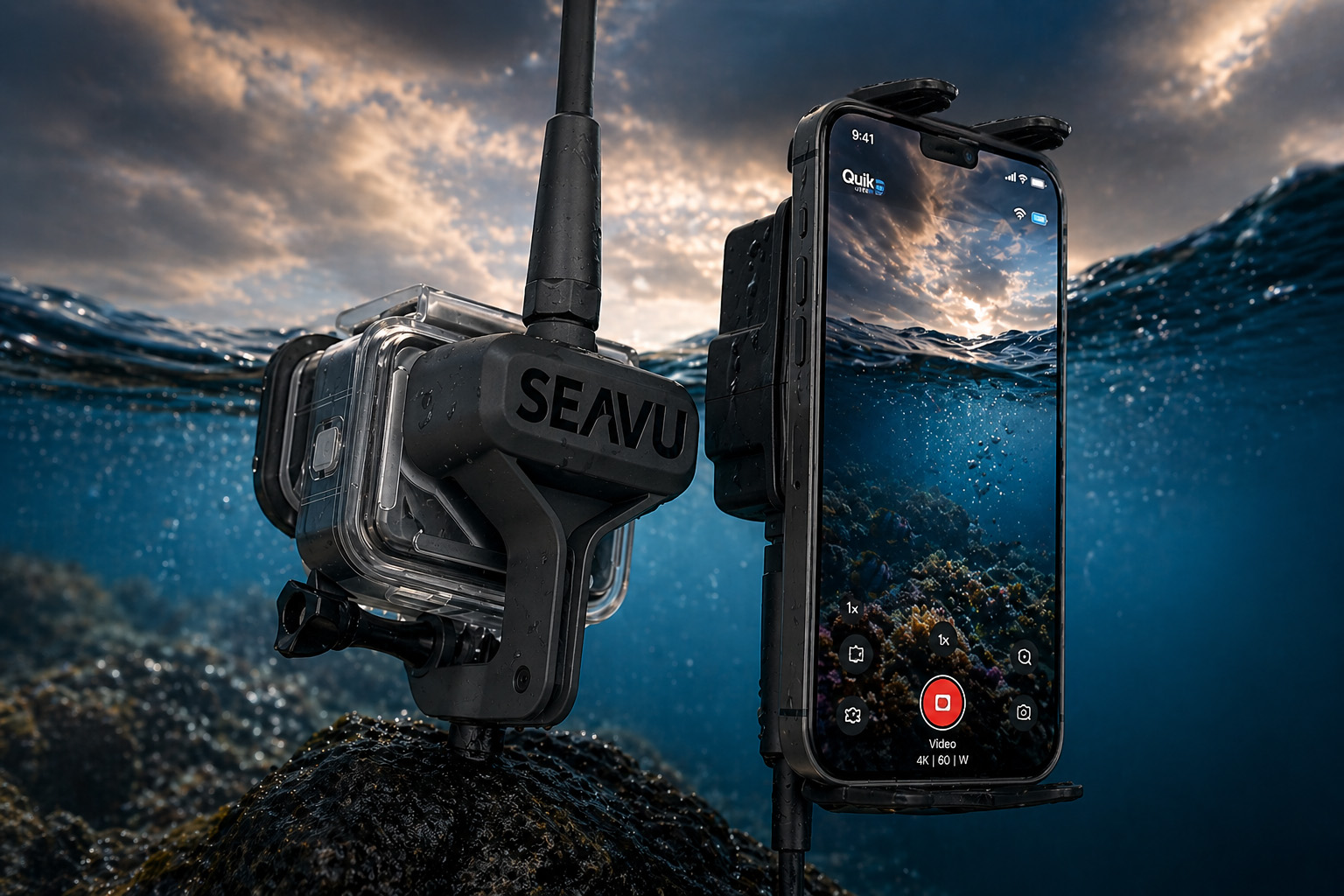
How the system works
- A receiver positioned near the camera captures its Wi-Fi and Bluetooth signals underwater
- Those signals are carried to the surface via a dedicated livestream cable
- Once above the surface, the signal is transmitted wirelessly to a phone or tablet for real-time viewing
By moving the signal out of the water before wireless transmission occurs, Seavu enables stable live viewing without relying on underwater Wi-Fi.
Designed for harsh marine environments
Marine environments are highly corrosive, particularly around exposed ports and plugs. Seavu systems avoid hard wired connections to both the camera and the viewing device, reducing the risk of corrosion and long-term failure.
All Seavu kits are designed to be marine-proof and suitable for repeated use in saltwater conditions.
Practical Implications for Real World Use
Understanding why WiFi and Bluetooth fail underwater explains many common experiences, including:
- Live view dropping at very shallow depths
- Camera apps reconnecting only when the camera is lifted out of the water
- Unreliable performance from standard wireless accessories
This is why alternative solutions are required for applications where reliable live viewing matters.
Where this matters in real world applications
The limitations of WiFi and Bluetooth underwater affect a wide range of use cases where a stable connection is critical:
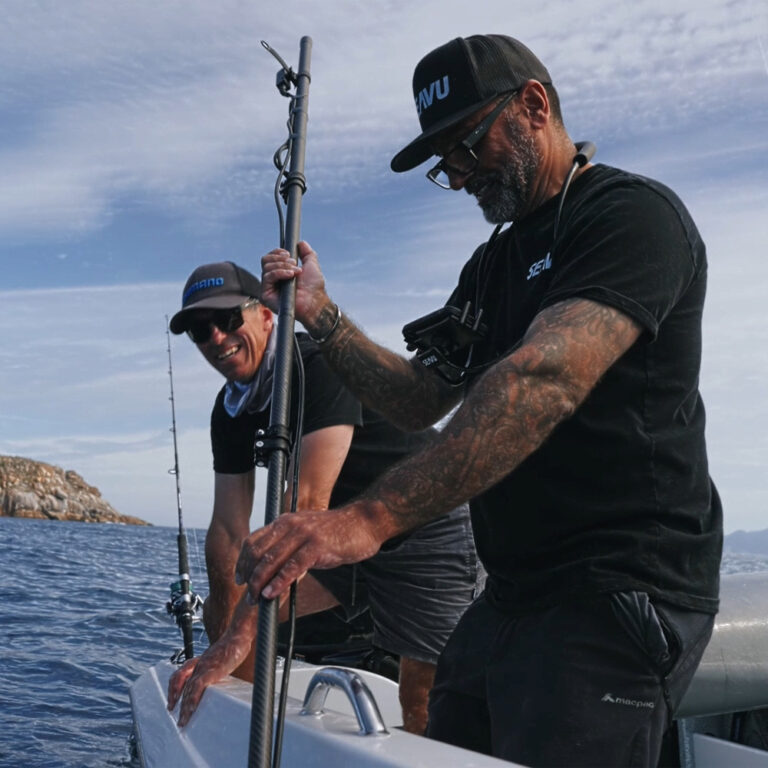
- Fishing – monitor fish behaviour, lure performance, and underwater activity in real time
- Underwater inspections – inspect hulls, moorings, structures, and infrastructure with a stable live feed
- Marine research – observe species, habitats, and environmental conditions with continuous visibility
- Filmmaking and content creation – capture and monitor underwater footage while shooting
- Coaching and training – review technique and performance with live underwater feedback
- Search and rescue – assist in locating objects or individuals underwater with real time visibility
To see how this works in practice, watch the example below from Henry Brockman, demonstrating stable live underwater viewing in real conditions.
Summary
WiFi and Bluetooth do not work underwater because water absorbs radio signals, making wireless transmission unreliable below the surface. While action cameras can record underwater footage internally, live viewing requires a different approach.
Systems like Seavu overcome this limitation by carrying the camera’s signal out of the water before transmitting it wirelessly, enabling stable, real time live underwater viewing without relying on underwater WiFi.
If you want to see how this works in real underwater environments, explore Seavu fishing camera systems below.